Supporting Questions:
- What does hard drive degaussing actually do?
- Which types of media can be degaussed?
- Is degaussing suitable for SSDs and flash storage?
- When should businesses choose degaussing over shredding?
- What evidence should organisations keep after degaussing?
Hard drive degaussing is still an effective data destruction method for modern businesses, but only when it is used for the right type of storage media. For magnetic hard drives and some other magnetic media, degaussing can make data unreadable by disrupting the magnetic fields used to store information. For solid-state drives, USB sticks, memory cards and other flash-based storage, it is not suitable because those devices do not store data magnetically.
That distinction matters. Many organisations now hold data across a mixture of old hard disk drives, newer SSDs, removable drives, server storage, backup tapes and redundant IT assets. Choosing the wrong destruction method can leave information exposed, even if the process looks secure on paper.
For businesses with regulatory, contractual or internal data security obligations, the key question is not simply whether degaussing works. The better question is whether degaussing is appropriate for the specific media, sensitivity level and disposal route involved.
What does hard drive degaussing actually do?
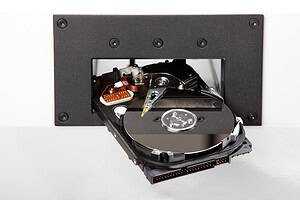
Degaussing uses a powerful magnetic field to disrupt the magnetic patterns on storage media. Traditional hard disk drives store data magnetically on spinning platters. When a suitable degausser is used correctly, the magnetic structure is altered so the data can no longer be read in a normal or recoverable way.
This is very different from deleting files, formatting a drive or removing a computer from service. Deletion usually removes references to files rather than immediately removing every trace of the underlying data. Formatting may make a device appear empty, but in many cases data can still be recovered with specialist tools if the storage media has not been properly sanitised.
The Information Commissioner’s Office states that electronic records should be destroyed using methods that prevent disclosure before, during and after disposal. It also warns that insecure destruction can create a risk that personal information remains recoverable, potentially breaching UK GDPR security obligations. (ICO)
For magnetic hard drives, degaussing can be a strong option because it targets the way the data is physically stored. Once the magnetic patterns are destroyed, the drive is normally rendered unusable as a functioning storage device.
Is degaussing still relevant when businesses use newer technology?
Yes, but its role has become more specific.
Many businesses still hold magnetic hard drives in desktop computers, laptops, older servers, backup systems, external drives, network-attached storage units and archived IT equipment. Data centres and IT departments may also have large volumes of redundant magnetic media from refresh projects, server upgrades or backup retirement.
In these situations, hard drive degaussing can still be highly relevant. It is fast, effective and suitable for processing magnetic media that should not be reused. It can also be useful where data sensitivity means the business does not want to rely on software wiping alone.
However, modern storage environments are more varied than they used to be. A single organisation may have:
- Magnetic hard disk drives
- Solid-state drives
- USB flash drives
- SD cards and memory cards
- Backup tapes
- Hybrid drives
- Mobile devices
- Embedded storage in specialist equipment
That means degaussing should not be treated as a universal data destruction method. It should be part of a media-specific destruction process.
Which types of media can be degaussed?
Degaussing is suitable for magnetic media. This typically includes traditional hard disk drives and magnetic tapes, provided the equipment used is suitable for the media type and strength required.
The National Cyber Security Centre describes secure sanitisation as the process of ensuring data held on electronic storage media cannot be read by unauthorised parties after it has left organisational control. Its guidance highlights the importance of understanding the type of storage media before choosing a sanitisation method. (National Cyber Security Centre)
This is important because not every device that stores data can be treated in the same way. A hard drive and an SSD may look similar from the outside, especially when removed from a laptop or server, but the underlying storage technology is very different.
Media where degaussing may be appropriate
Hard drive degaussing may be suitable for:
- Traditional magnetic hard disk drives
- Magnetic backup tapes
- Certain magnetic removable media
- Redundant drives that are not intended for reuse
The exact suitability depends on the coercivity of the media and the strength of the degausser. In simple terms, the magnetic field must be powerful enough to overcome the storage medium’s resistance and disrupt the recorded data.
Media where degaussing is not appropriate
Degaussing is not suitable for:
- SSDs
- USB memory sticks
- SD cards
- MicroSD cards
- Flash-based storage
- Many mobile devices
- Storage chips on circuit boards
These devices use electronic memory rather than magnetic platters. A magnetic field may damage some components, but it should not be relied on to securely destroy the data.
Why does degaussing not work on SSDs?
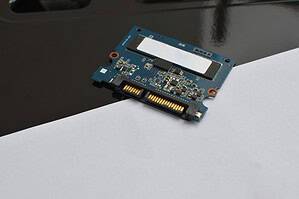
SSDs store data in NAND flash memory chips. The data is retained electronically rather than magnetically. Because there are no magnetic platters to disrupt, degaussing does not provide a reliable destruction method for SSDs.
This is one of the most common risks in modern IT disposal. A business may have an old process that says “degauss all drives”, but that process may have been created when almost all drives were magnetic. If the same process is applied to SSDs, the organisation may believe data has been destroyed when it has not.
SSDs also have features that can make data destruction more complex, including wear levelling, over-provisioning and inaccessible memory areas. These features are useful during normal operation, but they can make it harder to prove that every data-bearing area has been addressed through basic software processes.
For SSDs and flash-based devices, physical destruction using suitable crushing, shredding or disintegration is often preferred where reuse is not required. The method should be matched to the sensitivity of the data and the organisation’s compliance obligations.
When is hard drive degaussing a good choice?
Hard drive degaussing can be a good choice when an organisation has magnetic drives that are no longer required and must be taken permanently out of use.
It is particularly relevant where the business needs a quick, controlled and auditable process for large volumes of magnetic media. For example, a data centre retiring old server drives may need to process hundreds or thousands of disks. A legal firm may have archived drives containing confidential client files. A healthcare provider may have redundant systems that once held patient information.
In these scenarios, degaussing can reduce the risk of data recovery before the media moves to the next stage of disposal or recycling.
Real-world example: retiring old office computers
A business replaces 80 desktop computers across several departments. Some machines contain magnetic hard drives, while newer ones contain SSDs. If the organisation sends everything through the same disposal route without checking drive types, some data may not be destroyed properly.
A better approach is to separate the media first. Magnetic hard drives can be degaussed, while SSDs should be physically destroyed using a suitable method. The organisation should then retain records showing what was collected, how each type of media was processed and when destruction took place.
Real-world example: backup media held for too long
A company discovers a cupboard of old backup tapes from a previous IT system. Nobody actively uses them, but they may contain employee records, financial files, customer details or historic project data.
If the tapes are magnetic and no longer needed for legal or operational reasons, degaussing may be an appropriate way to make the data unreadable. The organisation should still record the asset type, destruction date and outcome, rather than simply disposing of the tapes as general waste.
Is degaussing better than hard drive shredding?
Degaussing and hard drive shredding solve related but slightly different problems. One removes the data by disrupting magnetic storage. The other physically destroys the device.
For many organisations, the strongest approach is to use degaussing and physical destruction together for magnetic hard drives. Degaussing makes the data unreadable, while shredding or crushing provides visible physical destruction and supports secure downstream recycling.
Degaussing alone can be effective for magnetic data destruction, but the drive remains as an object that needs to be controlled, recorded and disposed of responsibly. Physical destruction provides an additional layer of reassurance, especially for highly sensitive environments.
When degaussing may be enough
Degaussing may be sufficient where the media is magnetic, the process is properly controlled, the equipment is appropriate and the organisation has evidence of destruction.
When shredding should be considered
Shredding or crushing should be considered where the organisation wants physical proof that the asset cannot be reused, where the data is highly sensitive, or where mixed media types are present.
When both methods are appropriate
Using both methods may be appropriate for financial institutions, healthcare organisations, government contractors, data centres, legal firms and any business handling large volumes of sensitive or regulated information.
How does degaussing support GDPR data disposal?
UK GDPR does not prescribe one single destruction method for every situation. Instead, organisations must apply appropriate technical and organisational measures to protect personal data. That includes ensuring personal data is not exposed during retention, disposal or asset retirement.
The ICO’s data security guidance explains that organisations should protect data so it can only be accessed, altered, disclosed or deleted by authorised people acting within their authority. (ICO) Secure disposal is part of that wider security responsibility.
Degaussing can support GDPR data disposal when it is used correctly on suitable media and backed by a controlled process. The process should show that the organisation understood the risk, selected an appropriate method and kept evidence of what happened.
That evidence is especially important if the business later needs to respond to an audit, customer query, supplier assessment or data protection investigation.
What standards and records matter?
For secure destruction, the process around the destruction can be as important as the destruction method itself.
BS EN 15713:2023 is a recognised standard covering secure destruction of confidential and sensitive material, including procedures and controls for collection, storage, transport, destruction methods and certification. (BSI Knowledge)
For organisations, this highlights an important point. Secure data destruction should not rely on informal disposal, undocumented handovers or vague assurances. A business should be able to show how assets were handled from collection through to final destruction or recycling.
Useful records may include:
- Asset lists or collection inventories
- Chain of custody records
- Media type identification
- Destruction method used
- Date and location of destruction
- Certificate of data destruction
- Details of downstream recycling or disposal where relevant
A certificate of data destruction does not make an unsuitable method suitable. For example, a certificate saying an SSD was degaussed would not resolve the technical issue that degaussing is not a reliable method for SSDs. The certificate must reflect an appropriate process.
Should degaussing be done on site or off site?
Both on-site and off-site degaussing can be appropriate, depending on the organisation’s risk profile and operational needs.
On-site degaussing may be preferred when assets should not leave the premises before data has been destroyed. This can be useful for organisations handling sensitive personal data, commercially confidential information, legal documents, financial records or public sector information.
Off-site degaussing may be suitable where secure collection, transport and processing controls are in place. This can work well for businesses with multiple locations, bulk collections or ongoing IT asset disposal requirements.
The key issue is traceability. Whether destruction happens on site or off site, the organisation should know what was collected, who handled it, how it was transported, when it was destroyed and what evidence is available afterwards.
What are the risks of relying on degaussing alone?
The main risk is using degaussing for the wrong type of media. As more businesses move to SSDs and flash-based storage, this risk has increased.
Other risks include:
- Using equipment that is not powerful enough for the media
- Failing to separate magnetic drives from SSDs
- Not recording serial numbers or asset details
- Losing control of assets before destruction
- Treating deletion or formatting as equivalent to destruction
- Not retaining a certificate or audit trail
These risks are usually process failures rather than failures of degaussing itself. When used correctly on magnetic media, degaussing remains valuable. When used as a blanket process without media identification, it can create a false sense of security.
How should businesses decide whether degaussing is right?
A practical decision should start with three questions.
First, what type of storage media is involved? If it is magnetic, degaussing may be suitable. If it is flash-based, another method is required.
Second, how sensitive is the data? Highly sensitive or regulated information may justify combining degaussing with physical destruction.
Third, what evidence does the organisation need? A business should be able to demonstrate that it followed a secure, appropriate and documented process.
A good decision-making approach looks like this:
- Identify and separate storage media by type
- Confirm whether the media is magnetic or flash-based
- Choose a destruction method suitable for that media
- Maintain chain of custody throughout handling
- Record the destruction process
- Obtain a certificate of data destruction
- Ensure remaining materials are recycled or disposed of responsibly
This approach reduces the chance of technical mistakes and supports compliance-led disposal.
Frequently Asked Questions
Does degaussing permanently destroy hard drive data?
For suitable magnetic hard drives, degaussing can permanently make the data unreadable when the correct equipment and process are used. The drive will usually be unusable afterwards, so degaussing is intended for media that does not need to be reused.
Can a degaussed hard drive be reused?
In most cases, no. Degaussing can damage or erase essential drive information as well as stored data. Businesses should treat degaussed drives as end-of-life assets that require secure disposal or recycling.
Is degaussing enough for SSDs?
No. SSDs do not store data magnetically, so degaussing should not be used as a secure destruction method for them. SSDs usually require a different process, such as suitable physical destruction, depending on the data risk and whether reuse is intended.
Should businesses get a certificate after degaussing?
Yes. A certificate of data destruction helps show what was destroyed, when it was processed and which method was used. It should be supported by a clear chain of custody and accurate asset records.
Is degaussing still used by data centres?
Yes, degaussing can still be used where data centres are retiring magnetic hard drives or magnetic backup media. However, data centres also use SSDs and other storage technologies, so media identification is essential before choosing a destruction method.
Summary
Hard drive degaussing is still effective for modern businesses, but it is not a universal answer to every data destruction problem. It remains a strong method for magnetic hard drives and magnetic media, especially when used as part of a documented, compliance-led disposal process.
The main limitation is that modern organisations now use many types of storage. SSDs, USB drives and flash-based media need different destruction methods. Businesses that fail to separate media types may leave recoverable data behind, even when they believe a secure process has taken place.
For organisations handling sensitive information, the safest approach is to identify the storage media first, choose the correct destruction method, maintain a full audit trail and retain evidence such as a certificate of data destruction.
Varese Secure Ltd provides secure data destruction, hard drive destruction and degaussing services for organisations that need a controlled, traceable and compliance-focused process. Phone: 01489 854 131
Email: sales@varese-secure.co.uk
Contact Varese Secure Ltd
Phone: 01489 854 131
Email: sales@varese-secure.co.uk
Find out more: https://varese-secure.co.uk/
-
How Can Businesses Balance Data Security and Responsible Recycling?
Supporting Questions: Businesses can balance data security and responsible recycling by making sure data-bearing assets are securely destroyed or sanitised before equipment enters the recycling process. The priority should always be to protect confidential and…
-
Why Do SSDs Need a Different Destruction Method from Hard Drives?
SSDs need a different destruction method from hard drives because they store data in a completely different way. Traditional hard disk drives use magnetic platters, while solid-state drives use flash memory chips. This means a…
-
The Process of Degaussing a Hard Drive Explained
Degaussing a hard drive is one of the most effective methods of permanently erasing data stored on magnetic media. For organisations handling sensitive or regulated information, it offers a fast and reliable way to ensure…