After hard drive shredding, the remaining materials are collected, secured and prepared for specialist recycling or material recovery.
A shredded hard drive does not simply become general waste. It is broken into a mixture of metal, plastic, circuit-board material and other components that must be handled carefully. The first priority is data security. The second is responsible management of the resulting fragments.
For businesses, this distinction matters. Secure destruction is not complete simply because the drive has passed through a shredder. The provider should also control the shredded material, prevent fragments from being lost or removed and transfer the output into an appropriate recycling route.
The exact process depends on the shredding equipment, the size of the resulting fragments and the recycling facilities used. In many cases, the material is separated into different fractions so that metals and other recoverable materials can be processed for reuse.
However, businesses should not assume that every destroyed drive automatically enters a fully traceable recycling process. They should understand what happens after shredding and what documentation is available.
What materials are found inside a hard drive?
Hard drives contain a combination of metals, plastics and electronic components.
The exact materials vary according to the drive manufacturer, age, size and construction. A desktop or enterprise hard drive may include:
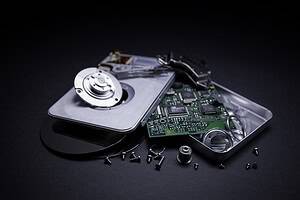
- An aluminium or steel outer casing
- Internal magnetic platters
- A spindle and motor assembly
- Read and write heads
- Copper wiring
- Magnets
- Printed circuit boards
- Plastic connectors and insulating materials
- Screws and small metal fittings
The data itself is stored on the magnetic surfaces of the internal platters.
When a hard drive is shredded correctly, the casing, platters, electronics and internal components are cut, torn or fractured into smaller pieces. The aim is to damage the data-bearing material so extensively that the original information cannot be reconstructed.
The resulting mix can then be prepared for material separation.
Why are shredded materials kept secure?
Shredding greatly reduces the risk of data recovery, but the fragments should still remain under controlled handling.
This is particularly important where the output includes pieces of platter material or electronic components. The provider should not allow the shredded material to spill, become mixed with unrelated waste or leave the processing area without documentation.
Secure handling may involve:
- Collecting fragments directly beneath the shredder
- Using sealed or locked containers
- Restricting access to the processing area
- Recording the weight or quantity of output
- Linking the material to a specific destruction project
- Transporting fragments through an approved waste route
- Retaining transfer and recycling records
For on-site destruction, the shredded material may leave the client’s premises after the drives have been processed. The provider should explain how it will be contained and where it will go next.
For off-site destruction, the fragments may be moved from the destruction area to a secure storage section before collection by a recycling partner.
The key point is that the chain of custody should not end abruptly at the shredder.
How are hard drive fragments separated?
Shredded hard drive material is often processed using mechanical separation equipment.
The exact sequence can differ between recycling facilities, but it may involve size reduction, magnetic separation, density separation or other sorting techniques.
Magnetic separation
Ferrous metals, such as certain types of steel, can be separated using magnets.
These materials may be removed from the mixed waste stream and directed into metal recycling.
This should not be confused with degaussing. Magnetic separation is used to sort metal fragments after destruction, while degaussing uses a powerful magnetic field to erase compatible magnetic media before or instead of shredding.
Separation of non-ferrous metals
Hard drives can also contain aluminium, copper and other non-ferrous metals.
These materials do not respond to ordinary magnetic separation in the same way as ferrous metals. Recycling facilities may use other mechanical processes to identify and separate them.
Aluminium from drive casings and internal components can be particularly valuable as a recoverable material.
Circuit-board material
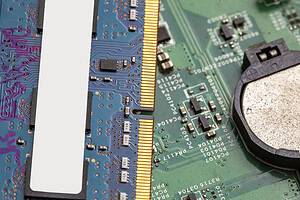
Printed circuit boards contain a mixture of metals, resin, glass fibres and electronic components.
They require specialist recycling because they are more complex than simple metal fragments.
Circuit-board processing may aim to recover useful metals while managing the remaining material through an appropriate regulated route.
Plastics and residual material
Plastic connectors, insulation and small internal parts may also remain after shredding.
Some plastics can be recovered, although the practical recycling options depend on their type, contamination and particle size.
Material that cannot be recycled should still be handled through an approved waste-management process rather than being discarded without control.
Can hard drive platters be recycled?
Hard drive platters can form part of the material-recovery process, but they must first be securely destroyed.
Platters may be manufactured using aluminium or glass-based materials with specialised coatings. Their construction varies between drive types.
Aluminium-based platter fragments may enter a metal recovery route after sufficient physical destruction. Glass-based platter material may require different handling.
The business should not focus solely on whether the platter material is recyclable. The first question should be whether the data-bearing surface has been destroyed to the required level.
Removing intact platters from drives for recycling or reuse would create an unacceptable data-security risk unless the information had already been securely sanitised.
Shredding should therefore take place before the fragments are released into a broader material-processing stream.
What happens to magnets inside hard drives?
Traditional hard drives contain strong magnets that help control the movement of the read and write heads.
During shredding, these magnets may break, separate from their mounting or remain attached to other fragments.
Recycling facilities may recover some magnetic and metallic materials, although the exact outcome depends on the size of the fragments and the separation technology available.
It is not usually practical for a client organisation to recover individual magnets from shredded drives. Their removal before destruction would also create unnecessary handling and could expose intact data-bearing components.
The safer approach is to destroy the complete drive through a controlled process and allow the downstream facility to separate materials at scale.
What happens to aluminium and steel?
The metal casing and internal structure of a hard drive can contribute a significant proportion of its weight.
After shredding, aluminium and steel fragments may be separated, cleaned and sent to specialist metal processors.
The metals can then be melted and used as secondary raw materials in future manufacturing.
This reduces the need for virgin material extraction and helps prevent usable resources from being lost through landfill or unsuitable disposal.
However, responsible recycling should not weaken the security process. A provider should never send intact hard drives into general metal recycling on the assumption that they will eventually be broken apart.
The drives should first be subjected to a defined and verifiable data-destruction method.
Are shredded hard drives classed as electronic waste?
Hard drives form part of the wider electrical and electronic equipment waste stream.
Once they reach the end of their useful life, they should be handled through an appropriate commercial recycling or waste-management route.
For businesses, this means avoiding general waste bins, mixed scrap collections or informal disposal arrangements.
Hard drives are not ordinary metal objects. Before shredding, they may contain personal data, commercially sensitive information and other confidential records. After shredding, they remain a mixture of electronic and mechanical materials requiring controlled treatment.
The destruction provider should be able to explain:
- Who handles the shredded material
- Whether a specialist recycling partner is used
- How transport is recorded
- What documentation is supplied
- Whether the material is separated into recoverable fractions
- How residual waste is managed
A vague statement that the fragments are “recycled” may not provide enough assurance for organisations with formal environmental or compliance requirements.
Does recycling happen immediately after shredding?
Not always.
The material may first be collected and stored securely until there is enough volume for efficient transport and processing.
For example, fragments may be placed into a sealed container at the destruction site. That container may then be transferred to a secure recycling facility once it reaches a suitable quantity.
The delay itself is not necessarily a problem, provided the material remains controlled.
The organisation should understand:
- Where the fragments will be stored
- How long they may remain there
- Who can access them
- How containers are identified
- Whether different clients’ material is combined
- What records follow the material
Once the storage media has been securely destroyed, combining fragments from different projects may not create the same data risk as combining intact drives. However, the process should still be traceable and responsibly managed.
How does on-site shredding affect the recycling process?
With on-site shredding, the hard drives are destroyed at the client’s premises before the material is removed.
This allows the organisation to retain oversight of its data-bearing assets until physical destruction has occurred.
The recycling stage then normally takes place elsewhere because most client sites do not have the industrial equipment needed to separate metals, circuit boards and plastics.
A typical on-site process may be:
- Hard drives are recorded and authorised.
- The assets are moved into a secure processing area.
- Each drive is shredded using suitable equipment.
- The fragments are collected in a secure container.
- The asset records are reconciled.
- The container is sealed and removed.
- The material is transported to an appropriate recycling facility.
- Recycling or transfer records are retained.
This approach separates the security-critical stage from the larger-scale material-recovery stage.
The organisation can witness the destruction while the provider manages the downstream recycling.
What happens after off-site hard drive shredding?
In an off-site service, intact drives are collected and transported under a secure chain of custody to a destruction facility.
Once received, they are checked against the collection or asset records and processed using the agreed method.
After shredding, the fragments are contained and prepared for recycling.
The organisation should still receive evidence showing that the drives were destroyed rather than merely collected.
Useful documentation can include:
- Collection records
- Container or seal references
- Asset or serial-number schedules
- Date and location of destruction
- Destruction method
- Certificate of destruction
- Waste-transfer information
- Recycling or recovery records
The fact that the process happens away from the client’s premises makes accurate reporting particularly important.
Can shredded hard drive material still contain recoverable data?
The answer depends on how completely the data-bearing components have been destroyed.
When hard drive platters are cut, torn and fragmented to an appropriate size, reconstructing the original magnetic data becomes infeasible.
However, fragment size and destruction quality matter.
If a machine only bends the casing or creates limited damage, significant sections of platter material may remain intact. This is why businesses should distinguish between crushing, punching and shredding.
A hard drive crusher may deform or penetrate the drive. A shredder physically reduces it into multiple fragments.
Both methods can have a place in a secure process, but the required result should be defined in advance.
The organisation should ask:
- What output size does the equipment produce?
- Are the magnetic platters cut as well as the casing?
- Is the machine suitable for enterprise and laptop drives?
- How is the result checked?
- Is further processing required?
- What happens to the fragments before recycling?
Physical appearance alone is not enough. A damaged device is not necessarily a securely destroyed device.
Are SSD materials handled in the same way?
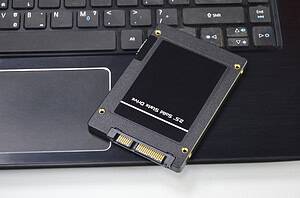
SSDs require different destruction considerations because their data is stored in flash memory chips.
After solid-state shredding, the resulting material may include:
- Circuit-board fragments
- Damaged NAND flash packages
- Metal casing pieces
- Plastic components
- Connectors
- Small electronic parts
The recycling route may be similar to other electronic circuit-board material, but the security requirement is different.
The memory chips must be broken sufficiently to prevent recovery. A particle size suitable for a magnetic hard drive may not always be suitable for compact solid-state storage components.
For this reason, a mixed-media project should separate hard drives and SSDs before destruction.
The provider should select the correct machine and output size for each technology.
Once the solid-state data-bearing components have been properly destroyed, the fragments can enter an appropriate electronic recycling process.
What evidence should businesses request?
A certificate of destruction records that the data-bearing devices were processed.
For broader assurance, businesses may also request information about what happened to the resulting material.
Useful records can include:
- Certificate of destruction
- Serial-number or asset report
- Chain-of-custody documents
- Waste transfer note
- Recycling certificate
- Material-recovery statement
- Collection and transport records
- Exception report
Not every project will require all of these documents.
The correct evidence depends on the organisation’s security, environmental and audit requirements.
Certificate of destruction
This should identify the client, date, location, media type and destruction method.
Where individual tracking is required, it should link to an asset schedule.
Waste-transfer documentation
This records the transfer of waste between parties and supports the organisation’s environmental responsibilities.
It does not replace the destruction certificate because it may not prove that the data-bearing components were securely processed.
Recycling evidence
A recycling record may confirm that the shredded material entered an approved recovery route.
It should be clear whether the document covers complete IT equipment, shredded fragments or a broader mixed material stream.
How can businesses assess a provider’s recycling process?
Businesses should ask practical questions about the full journey of the material.
These may include:
- Are hard drives destroyed before recycling?
- Is the shredding completed on-site or off-site?
- What particle size is produced?
- How are fragments secured?
- Which recycling facilities receive the material?
- Are downstream contractors used?
- How are metals and circuit boards separated?
- What happens to non-recyclable residues?
- What documentation is available?
- Can asset destruction and material recycling be evidenced separately?
A provider should be able to explain the process clearly.
Responsible handling should not rely on broad claims about being green or environmentally friendly. The business should understand the actual steps used to protect data and recover materials.
Can intact hard drives be sent directly for recycling?
They should not be sent into an uncontrolled recycling process while they still contain recoverable information.
A recycling facility may eventually dismantle, shred or process the devices, but the client organisation needs assurance that secure destruction will occur before unauthorised access becomes possible.
Direct transfer may be acceptable where the recycling provider also operates a controlled, verified data-destruction process. In that situation, the organisation should assess the provider’s chain of custody, security controls and documentation.
The key issue is not the label applied to the company. It is whether data protection and material recovery are both addressed properly.
A collector describing itself as an IT recycler may not necessarily provide certified data destruction.
How does recycling support an organisation’s wider responsibilities?
Secure recycling can help organisations meet both information-security and environmental objectives.
From a security perspective, it prevents old storage devices from entering resale, reuse or waste channels with recoverable data.
From an environmental perspective, it allows useful metals and materials to be recovered rather than discarded unnecessarily.
This is particularly relevant during:
- Data centre decommissioning
- Office relocations
- Hardware refresh projects
- Server replacements
- Business closures
- Cloud migration projects
- Large IT asset disposal programmes
These projects can create significant volumes of redundant storage media. A planned process helps prevent hard drives from being separated from the wider IT inventory or handled through an unsuitable waste stream.
The strongest approach combines destruction, tracking and recycling rather than treating them as unrelated tasks.
What happens if materials cannot be recycled?
Not every fragment can necessarily be recovered.
Mixed, contaminated or very small material may not be suitable for further separation. Certain resins, plastics or residual components may require another form of regulated waste treatment.
The provider should manage these residues responsibly and should not make unrealistic claims that every part of every hard drive is always recycled.
A credible process distinguishes between:
- Materials recovered for recycling
- Materials sent for specialist treatment
- Residual material that cannot be economically recovered
Transparency is more useful than an unsupported claim of complete recycling.
Frequently Asked Questions
Are hard drive platters valuable after shredding?
Their value depends on their material, condition and the recycling process. Aluminium-based platter fragments may contribute to metal recovery, while glass-based materials require different handling.
Can shredded hard drives go into ordinary scrap metal?
They should be handled through a suitable electronic waste and material-recovery route. The mixture of metals, circuit boards, plastics and other components makes them more complex than ordinary scrap.
Does shredding remove hazardous materials?
Shredding does not remove or neutralise materials. It reduces the device physically. The resulting fragments still need to be managed through an appropriate recycling or waste-treatment process.
Are magnets removed before hard drive shredding?
Usually, the complete drive is shredded without manual magnet removal. This reduces unnecessary handling of intact data-bearing components and allows downstream separation to take place at scale.
Can hard drives be recycled without destroying them?
They can only be reused or recycled intact if the data has first been securely sanitised and the result has been verified. Failed or high-risk drives may require physical destruction.
Do shredded fragments need a chain of custody?
They should remain securely controlled and documented until they enter an appropriate recycling route. The level of tracking may change after verified destruction, but the material should not become unaccounted for.
Is a recycling certificate the same as a destruction certificate?
No. A destruction certificate records the treatment of the data-bearing media. A recycling certificate relates to the handling or recovery of the resulting equipment or materials.
Are SSD fragments recycled differently from hard drive fragments?
They may enter similar electronic material-recovery routes, but SSDs require finer physical destruction because data is stored in small flash memory chips.
After hard drive shredding, the material is collected securely and transferred into a specialist recycling or recovery process.
The fragments may be separated into ferrous metals, aluminium, copper, circuit-board material, plastics and residual waste. Recoverable materials can then be processed for future use, while other fractions are handled through an appropriate regulated route.
Data security must come first. Drives should be destroyed before their materials enter a broader recycling stream, and the resulting fragments should remain controlled until the required destruction outcome has been achieved.
Businesses should also distinguish between destruction evidence and recycling evidence. A certificate of destruction helps show that the information was treated securely, while waste and recycling records explain what happened to the physical material afterwards.
Varese Secure supports organisations requiring secure hard drive destruction, clear asset tracking and responsible handling of destroyed materials. To discuss on-site or off-site processing for your data-bearing equipment, contact the team.
Contact Varese Secure Ltd
Phone: 01489 854 131
Email: sales@varese-secure.co.uk
Find out more: https://varese-secure.co.uk/
-
Can Hard Drives Be Destroyed at Your Premises?
Yes, hard drive destruction can be carried out at your organisation’s premises using specialist mobile equipment and a controlled on-site process. On-site hard drive destruction allows data-bearing assets to remain within the organisation’s location until…
-
What Types of Devices Can a Solid-State Media Shredder Destroy?
A solid-state media shredder can destroy a wide range of devices that store data electronically in flash memory. These may include solid-state drives, USB flash drives, memory cards, small storage modules and some data-bearing circuit…
-
How Are Assets Tracked During On-Site Destruction?
Assets are tracked during on-site destruction by recording each data-bearing device before it enters the destruction process, maintaining control over its movement, confirming that it has been processed and reconciling the final records against the…