Supporting Questions:
- Why is data security important before IT recycling?
- Can hard drives and IT assets be recycled securely?
- What should happen before equipment enters the recycling stream?
- How can businesses prove data was destroyed before recycling?
- What should organisations look for in a secure IT asset disposal process?
Businesses can balance data security and responsible recycling by making sure data-bearing assets are securely destroyed or sanitised before equipment enters the recycling process. The priority should always be to protect confidential and personal information first, then recover or recycle the remaining materials through an appropriate disposal route.
This balance matters because redundant IT equipment can create two very different risks. If it is disposed of insecurely, sensitive data may be recovered from hard drives, SSDs, USB sticks, memory cards or other storage media. If it is treated purely as waste, usable materials may be lost and environmental responsibilities may be overlooked.
A good process should address both issues. It should prevent data exposure, support GDPR data disposal, provide a clear audit trail and allow non-data-bearing materials to be recycled responsibly wherever possible.
Why data security must come before recycling
Recycling is important, but it should not happen before data security has been dealt with. A computer, server, external drive or storage device may look like redundant equipment, but it may still contain business-critical or personal information.
Old IT assets can hold:
- Customer records
- Employee files
- Financial spreadsheets
- Contracts and legal documents
- Scanned identification
- Database exports
- Emails and attachments
- Saved passwords or cached login data
- Confidential project files
- Supplier and client information
If equipment is sent for recycling while storage media remains intact, the organisation may lose control of the data. Even if the equipment is broken, old or no longer operational, recoverable information may still be present.
This is why secure IT asset disposal should begin with data-bearing media identification. The business needs to know which items contain data before deciding how they should be recycled.
Why recycling alone is not secure data destruction
IT recycling and secure data destruction are related, but they are not the same thing.
Recycling focuses on recovering materials, reducing waste and processing redundant equipment responsibly. Secure data destruction focuses on making data unreadable and unrecoverable using a method appropriate for the storage media.
A recycling provider may handle old electronics correctly from an environmental perspective, but that does not automatically mean the data has been securely destroyed. If intact storage devices are passed into a recycling stream without proper controls, there may be a risk of loss, theft, resale or unauthorised recovery.
For businesses, this can create a serious gap. An invoice for recycling is not the same as a certificate of data destruction. A waste transfer record does not necessarily prove that a hard drive, SSD or USB stick was securely destroyed.
The safest approach is to separate the two responsibilities clearly. First, destroy or sanitise the data. Then recycle the remaining materials.
What should happen before IT equipment is recycled?
Before IT equipment is recycled, businesses should identify whether the asset contains any data-bearing media. This includes obvious storage devices such as hard drives and SSDs, but also less obvious components such as embedded memory, USB drives, SD cards, mobile devices and storage inside printers or network equipment.
A secure pre-recycling process should include:
- Identifying assets due for disposal
- Checking whether they contain storage media
- Separating hard drives, SSDs, tapes and flash storage
- Choosing the correct destruction method for each media type
- Maintaining chain of custody
- Recording what has been processed
- Obtaining a certificate of data destruction
- Sending remaining materials for responsible recycling
This helps ensure recycling does not begin until data risk has been removed.
How can hard drives be recycled securely?
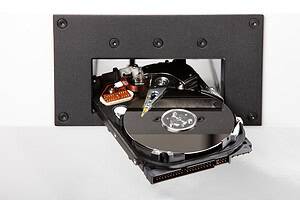
Hard drives can be recycled securely when the data-bearing platters are destroyed or sanitised before the remaining materials are processed.
For magnetic hard disk drives, secure destruction may involve degaussing, physical crushing, shredding or a combination of methods. Degaussing disrupts the magnetic data stored on the platters, while physical destruction prevents the device from being reused.
Once the data risk has been addressed, the remaining materials can be recycled through appropriate routes. Hard drives contain metals and other materials that may be recovered, but they should not enter recycling as intact, unprocessed data-bearing assets.
The right destruction method depends on the organisation’s risk level. A business handling routine internal data may have different requirements from a legal firm, healthcare provider, financial organisation or data centre.
How should SSDs and flash storage be handled before recycling?
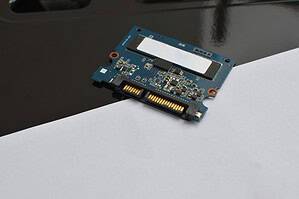
SSDs and flash-based storage need different handling from magnetic hard drives. They store data electronically in memory chips, not magnetically on platters. This means degaussing is not suitable.
Flash-based storage includes:
- Solid-state drives
- USB memory sticks
- SD cards
- MicroSD cards
- Embedded memory chips
- Some mobile devices and specialist equipment
For end-of-life flash media, physical destruction should target the data-bearing memory chips. Simply damaging the casing, formatting the device or passing it into recycling may not provide enough assurance.
This is especially important because flash storage can be small and easily overlooked. A single USB stick or memory card may hold a large quantity of personal or confidential data.
Can businesses reuse equipment instead of recycling it?
In some cases, yes. Reuse can be more environmentally beneficial than recycling because it extends the life of equipment. However, reuse should only be considered after data has been securely removed and the organisation is confident the device is safe to redeploy, resell or donate.
For internal reuse, secure sanitisation may be appropriate where suitable tools and verification processes are in place. For external reuse, the standard of assurance should be higher because the equipment is leaving organisational control.
Businesses should be cautious about passing on computers, laptops or drives without a documented data removal process. Even if devices are being donated for a good cause or resold to recover value, data protection must come first.
A practical rule is simple: no device should leave the organisation until the data has been securely sanitised or the storage media has been removed and destroyed.
How does responsible recycling support business compliance?
Responsible recycling supports compliance by helping organisations manage redundant IT assets in a controlled and accountable way. It shows that the business is not simply discarding equipment without considering data security, environmental responsibility or legal obligations.
For organisations with GDPR responsibilities, the most important issue is preventing unauthorised access to personal data. Recycling becomes a compliance concern when data-bearing devices are involved. The organisation must ensure personal data is protected throughout disposal.
Responsible recycling also supports wider corporate responsibility. Many businesses now have environmental policies, procurement requirements or client expectations around waste reduction and sustainable disposal. A secure IT asset disposal process can support these goals without compromising data protection.
The strongest approach combines both priorities: secure destruction for data-bearing media and responsible recycling for remaining materials.
What is the role of an audit trail?
An audit trail is essential because it helps prove that the business handled data and assets properly. Without records, it can be difficult to show what happened to redundant equipment after it left active use.
A good audit trail may include:
- Asset lists
- Serial number records where required
- Collection records
- Chain of custody documentation
- Media type identification
- Destruction method details
- Certificate of data destruction
- Recycling or disposal documentation
This evidence can be useful during audits, client reviews, insurance checks, internal investigations or compliance assessments.
It also helps reduce uncertainty. If a business is asked what happened to a batch of old laptops, the answer should not depend on memory or informal emails. It should be supported by records.
Why chain of custody matters during disposal
Chain of custody records who had control of assets at each stage of the disposal process. This is important because storage media creates risk until it has been destroyed or sanitised.
If old computers are left in an unlocked storage area, collected without documentation or transported without secure controls, there may be gaps in the process. Even if the equipment is eventually recycled, those gaps can create uncertainty.
A strong chain of custody helps show:
- Where assets were collected from
- Who handled them
- When they were transferred
- Where they were stored
- When destruction took place
- What happened to the remaining materials
For higher-risk organisations, on-site data destruction may reduce chain of custody risk because the data-bearing media is destroyed before leaving the premises.
On-site destruction and responsible recycling
On-site destruction can help businesses balance security and recycling by separating the data risk from the material recovery stage. Storage media is destroyed at the organisation’s location, then the remaining materials can be transported for recycling without the same level of data exposure risk.
This can be especially useful for:
- Data centres
- Legal firms
- Healthcare providers
- Financial organisations
- Public sector bodies
- Businesses with strict client confidentiality obligations
- Organisations processing large volumes of redundant IT equipment
On-site destruction is not always required, but it can provide stronger reassurance where data sensitivity is high.
Real-world scenario: office IT refresh
A business replaces 100 desktop computers and 40 laptops. Some devices contain magnetic hard drives, while newer laptops contain SSDs. The company also finds old USB sticks, external drives and a box of backup media in the IT store.
If all equipment is sent directly to a general recycling provider, the business may lose control of sensitive data. Some drives may still be intact. SSDs may not be destroyed correctly. USB sticks may be overlooked altogether.
A secure and responsible approach would involve identifying all storage media, separating hard drives from SSDs and flash devices, destroying or sanitising the data-bearing components, issuing a certificate of data destruction, and then recycling the remaining equipment.
This protects the business while still supporting environmental goals.
Real-world scenario: recycling damaged equipment
A company has several damaged laptops after years of use. Some have broken screens, failed batteries or cracked casings. Staff assume they are safe because the devices no longer work properly.
However, the internal storage may still contain recoverable data. A damaged laptop can still hold personal records, email files, downloaded documents or cached information. Recycling the equipment without first dealing with the storage media may expose the business to data risk.
The safer process is to treat damaged equipment as data-bearing until proven otherwise. The storage should be identified, destroyed or sanitised, and only then should the remaining device be recycled.
What should organisations look for in a secure IT asset disposal process?
A secure IT asset disposal process should be designed around both data protection and responsible recycling. It should not treat redundant IT equipment as ordinary waste.
Businesses should look for:
- Media identification before processing
- Appropriate destruction methods for HDDs, SSDs and flash media
- On-site and off-site options where required
- Secure collection and transport controls
- Chain of custody records
- Certificate of data destruction
- Responsible recycling of remaining materials
- Clear communication about what has been destroyed
- Support for audit and compliance records
The process should also be practical. Organisations need a method that works for real-world disposal projects, including mixed devices, damaged equipment, multiple locations and large asset volumes.
How can businesses avoid common disposal mistakes?
Many disposal risks come from simple mistakes rather than deliberate neglect. Businesses can reduce risk by making secure disposal part of normal IT and compliance procedures.
Common mistakes include:
- Deleting files instead of securely destroying data
- Sending intact drives directly for recycling
- Forgetting about USB sticks and memory cards
- Treating damaged devices as safe
- Using degaussing for SSDs
- Failing to keep a certificate of data destruction
- Not recording which assets were processed
- Allowing redundant devices to sit unsecured for months
A clear policy can help prevent these issues. Staff should know who is responsible for redundant equipment, where assets should be stored, and how destruction should be arranged.
Can secure destruction and sustainability work together?
Yes, secure destruction and sustainability can work together when the process is managed correctly. Data security does not require businesses to ignore recycling, and recycling does not require businesses to compromise data protection.
The right sequence is important. Data-bearing media should be destroyed or sanitised first. Once data risk has been removed, remaining metals, plastics and components can be processed responsibly.
This approach allows businesses to protect information, meet compliance expectations and reduce unnecessary waste.
Frequently Asked Questions
Can hard drives be recycled after destruction?
Yes. Once the data-bearing components have been securely destroyed, remaining materials from hard drives can often be recycled through suitable routes. Data security should be completed before recycling.
Is IT recycling the same as secure data destruction?
No. IT recycling focuses on recovering materials or disposing of equipment responsibly. Secure data destruction focuses on making data unreadable and unrecoverable. Businesses often need both processes.
Should SSDs be recycled differently from hard drives?
Yes. SSDs store data in flash memory chips, so they need a destruction method suitable for flash storage before recycling. Degaussing is not suitable for SSDs.
Can businesses donate old computers safely?
They can, but only after the data has been securely sanitised or the storage media has been removed and destroyed. A factory reset or file deletion may not provide enough assurance for business devices.
Do organisations need proof before recycling IT assets?
Yes. Businesses should retain evidence such as asset records, chain of custody documentation, certificates of data destruction and recycling records. This helps demonstrate secure and responsible disposal.
Summary
Businesses can balance data security and responsible recycling by making secure destruction the first step in the IT disposal process. Data-bearing media should be identified, separated and destroyed or sanitised before equipment moves into recycling, resale or donation routes.
This approach helps reduce data breach risk, supports GDPR data disposal and ensures redundant IT assets are handled responsibly. It also gives organisations the evidence they need through audit trails, chain of custody records and certificates of data destruction.
Recycling is important, but it should never rely on intact storage devices entering uncontrolled disposal channels. By combining secure data destruction with responsible material recovery, businesses can protect information while reducing environmental impact.
Varese Secure Ltd provides secure data destruction, hard drive destruction, degaussing and compliant IT asset disposal services for organisations that need a controlled, traceable and compliance-focused process.
Contact Varese Secure Ltd
Phone: 01489 854 131
Email: sales@varese-secure.co.uk
Find out more: https://varese-secure.co.uk/
-
Why Do SSDs Need a Different Destruction Method from Hard Drives?
SSDs need a different destruction method from hard drives because they store data in a completely different way. Traditional hard disk drives use magnetic platters, while solid-state drives use flash memory chips. This means a…
-
How Can Organisations Prove They Followed Secure Destruction Standards?
Organisations can prove they followed secure destruction standards by keeping clear, accurate and traceable evidence of how data-bearing assets were handled, destroyed and disposed of. This evidence should show what was collected, who handled it,…
-
Is Deleting Files Enough Before Disposing of a Computer?
Deleting files before disposing of a computer is not enough for most businesses. When a file is deleted, the computer usually removes the visible reference to that file rather than immediately removing every trace of…