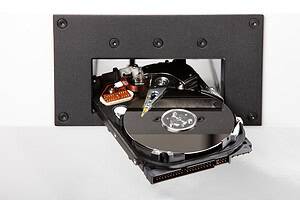
A certificate of destruction hard drive is a critical document for organisations that need to prove secure and compliant data disposal. Simply destroying a device is not enough. Without documented evidence, there is no way to verify that sensitive data has been permanently removed.
For businesses operating under GDPR and other regulatory frameworks, having a certificate of destruction hard drive provides essential assurance that data disposal has been handled correctly.
What Is a Certificate of Destruction?
A certificate of destruction is an official document issued after a hard drive has been securely destroyed. It confirms that the destruction process has been completed in accordance with recognised standards.
This document serves as proof that:
- Data has been permanently destroyed
- The process followed compliant procedures
- The assets were handled securely throughout
Without this documentation, organisations cannot demonstrate accountability for how data-bearing devices were disposed of.
Why a Certificate of Destruction Hard Drive Matters
Many organisations focus on the physical act of destruction but overlook the importance of documentation.
A certificate of destruction hard drive is essential because it:
- Provides evidence during audits or compliance checks
- Demonstrates adherence to GDPR requirements
- Protects the organisation in the event of a data breach investigation
- Supports internal governance and risk management processes
Guidance from the Information Commissioner’s Office makes it clear that organisations must not only protect data but also demonstrate how they have done so.
What Information Should Be Included?
Not all certificates are equal. A robust certificate of destruction hard drive should include detailed and verifiable information.
Core Details
- Date and time of destruction
- Location where destruction took place
- Method of destruction used
Asset Identification
- Serial numbers of destroyed drives
- Asset tags or internal references
- Quantity of devices processed
Provider Information
- Name of the destruction provider
- Authorised signature or certification
- Confirmation of compliance with relevant standards
This level of detail ensures that the certificate is not just a formality, but a reliable record that can stand up to scrutiny.
Real-World Scenario: Missing Documentation
A financial services firm disposes of several hard drives through a third-party provider. Months later, a compliance audit is conducted.
The issue:
- No certificate of destruction hard drive is available
- No record of which drives were processed
- No proof of destruction method
Even if the drives were physically destroyed, the lack of documentation creates a compliance failure. The organisation cannot demonstrate that it met its obligations.
This highlights why the certificate is just as important as the destruction process itself.
Is a Certificate Required for GDPR Compliance?
GDPR does not explicitly state that a certificate of destruction hard drive is mandatory. However, it does require organisations to:
- Protect personal data throughout its lifecycle
- Dispose of data securely
- Demonstrate accountability
In practice, a certificate is one of the most effective ways to meet these requirements.
Without it, organisations may struggle to prove:
- That data was destroyed
- When it was destroyed
- How it was destroyed
For compliance-driven industries, certificates are considered a best practice rather than an optional extra.
Certificate vs No Certificate: Risk Comparison
Understanding the difference highlights why documentation matters.
Without a Certificate
- No proof of destruction
- Increased liability in case of breach
- Weak audit trail
- Higher compliance risk
With a Certificate
- Verified destruction process
- Full audit trail
- Strong compliance position
- Reduced legal and reputational risk
For most organisations, the decision is clear.
When Should You Request a Certificate?
A certificate of destruction hard drive should be obtained whenever:
- Devices contain personal or sensitive data
- Equipment is being decommissioned or replaced
- Assets are leaving organisational control
- Regulatory compliance must be demonstrated
This applies across industries, including healthcare, finance, legal and public sector organisations.
Choosing a Provider That Issues Proper Certification
Not all providers offer the same level of documentation. When selecting a service, organisations should ensure that certification is part of the process.
Look for providers that offer:
- Detailed asset tracking
- Transparent destruction methods
- Secure chain of custody
- Clear and verifiable certificates
This ensures that the certificate of destruction hard drive is meaningful and defensible.
What Happens If You Don’t Have Proof?
Failing to provide evidence of destruction can lead to serious consequences:
- Regulatory scrutiny during audits
- Potential fines if data protection failures are identified
- Difficulty proving compliance to clients or partners
- Increased reputational risk
Even if data has been destroyed, the inability to prove it creates uncertainty and exposure.
Good, Better, Best Approach to Documentation
Organisations can take different approaches depending on their requirements.
Good
- Basic confirmation of destruction
Better
- Certificate with method and date details
Best
- Full certificate with serial tracking, audit trail and compliance confirmation
For most compliance-driven organisations, the “best” level is necessary to meet expectations.
Frequently Asked Questions
Q1: What is a certificate of destruction hard drive?
A1: It is a document confirming that a hard drive has been securely destroyed using a compliant method.
Q2: Is a certificate legally required?
A2: Not always explicitly required, but it is essential for demonstrating compliance with GDPR and data protection obligations.
Q3: Who provides the certificate?
A3: The data destruction service provider issues the certificate after completing the process.
Q4: What happens if I lose the certificate?
A4: You may struggle to prove compliance during audits or investigations, increasing risk exposure.
Q5: Does every hard drive need a certificate?
A5: For organisations handling sensitive data, it is strongly recommended for every device processed.
Summary
A certificate of destruction hard drive is a vital part of any secure data disposal process. It provides the evidence needed to demonstrate compliance, protect against risk and maintain accountability.
Without proper documentation, even correctly destroyed devices can create compliance issues. By ensuring that every destruction process is accompanied by a detailed certificate, organisations can confidently meet their data protection obligations.
If you require certified hard drive destruction with full audit trails and documentation, working with a specialist provider ensures that both the process and the proof are handled to the highest standard.
Contact Varese Secure Ltd
Phone: 01489 854 131
Email: sales@varese-secure.co.uk
Find out more: https://varese-secure.co.uk/
-
How Can Businesses Balance Data Security and Responsible Recycling?
Supporting Questions: Businesses can balance data security and responsible recycling by making sure data-bearing assets are securely destroyed or sanitised before equipment enters the recycling process. The priority should always be to protect confidential and…
-
How Can Organisations Prove They Followed Secure Destruction Standards?
Organisations can prove they followed secure destruction standards by keeping clear, accurate and traceable evidence of how data-bearing assets were handled, destroyed and disposed of. This evidence should show what was collected, who handled it,…
-
Is Deleting Files Enough Before Disposing of a Computer?
Deleting files before disposing of a computer is not enough for most businesses. When a file is deleted, the computer usually removes the visible reference to that file rather than immediately removing every trace of…